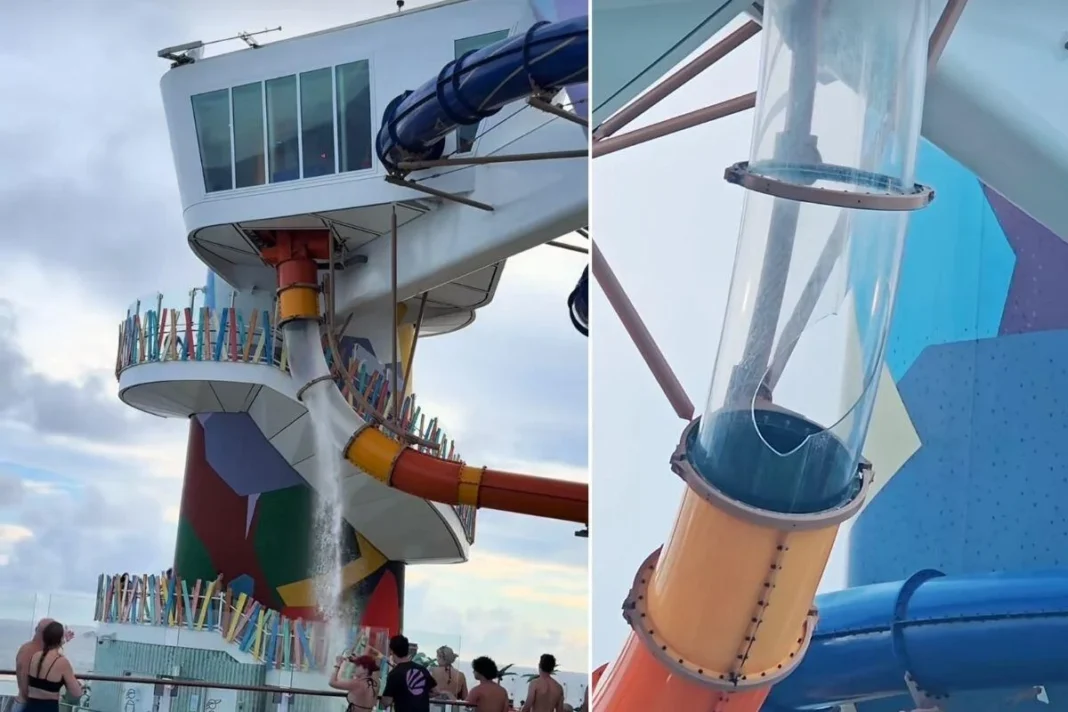
The vast ocean has long been a playground for adventure seekers, but sometimes, the thrill turns into terror. On August 7, 2025, aboard Royal Caribbean’s Icon of the Seas—the world’s largest cruise ship—a routine ride down a waterslide escalated into a nightmare. A male passenger was severely injured when an acrylic panel on the Frightening Bolt waterslide shattered unexpectedly, leading to what many are calling a preventable royal caribbean slide accident. This incident not only highlights the risks associated with high-adrenaline attractions at sea but also raises questions about safety protocols on luxury cruise liners. As details emerged from eyewitness videos and official statements, the event quickly gained media attention, sparking discussions on passenger rights and corporate responsibility.
The Icon of the Seas, launched in 2024, is a marvel of modern engineering, boasting over 20 decks, capacity for more than 7,000 passengers, and an array of attractions designed to rival theme parks. Among its highlights is Thrill Island, a dedicated area for adrenaline-pumping activities, including the Frightening Bolt—a 46-foot-high tubular waterslide that promises twists, turns, and heart-pounding drops. Marketed as the “tallest waterslide at sea,” it features enclosed sections with acrylic panels allowing riders to glimpse the ocean below while hurtling through at high speeds. However, on that fateful day, what was meant to be an exhilarating experience turned disastrous when the structural integrity of one of these panels failed.
Eyewitness accounts paint a vivid picture of the chaos. Video footage captured by fellow passengers and shared on social media platforms shows the moment the acrylic glass panel ruptured. As the unidentified adult male slid down, a section of the slide’s bottom gave way, creating a gaping hole from which water gushed out forcefully. Shards of jagged acrylic scattered, and screams echoed from onlookers below who yelled, “Stop the slide!” The passenger, instead of completing the ride unscathed, was “sliced open” by the sharp edges of the broken material. Initial reports suggested he might have fallen through the gap, but clarifications confirmed the injuries stemmed from lacerations caused by the shattering glass. Royal Caribbean’s medical team responded promptly, treating the man onboard, where he was reported to be in stable condition. The severity of his wounds, however, remains undisclosed, fueling speculation about long-term effects such as scarring or mobility issues.
This royal caribbean slide accident isn’t an isolated event in the cruise industry’s history. Cruise ships have increasingly incorporated theme park-like features to attract families and thrill-seekers, but with these additions come heightened risks. The Icon of the Seas, part of Royal Caribbean’s Icon Class, was designed to push boundaries, with attractions like the Crown’s Edge—a skywalk 154 feet above the ocean—and the largest water park at sea. Yet, just a month prior, in July 2025, another incident occurred on the same ship when a passenger fell over a glass railing near the infinity pool, fortunately without serious injury. These back-to-back mishaps have amplified concerns about whether the rapid innovation in onboard entertainment is outpacing safety measures.
Royal Caribbean International, founded in 1968 and headquartered in Miami, Florida, is one of the world’s leading cruise operators, with a fleet of 28 ships as of 2025. The company prides itself on delivering “wow” moments through innovative experiences, but it has faced criticism over safety in the past. From norovirus outbreaks to overboard incidents, the industry as a whole grapples with maintaining standards amid the unique challenges of operating at sea. In response to this royal caribbean slide accident, a spokesperson for Royal Caribbean issued a statement confirming the event: “Our team provided medical care to an adult guest when acrylic glass broke off a water slide as the guest passed through the slide.” The slide was immediately closed for the remainder of the voyage, which had departed from Miami en route to the Bahamas and Mexico, returning on August 9. The company emphasized that a thorough safety investigation was underway, but details on the cause—such as material fatigue, manufacturing defects, or inadequate maintenance—have not been publicly released.
The fallout from the royal caribbean slide accident extended beyond the ship. By August 12, reports surfaced that the injured passenger intended to pursue legal action against Royal Caribbean. Represented by maritime law experts, the lawsuit alleges negligence, claiming the cruise line failed to ensure the slide’s safety. Under federal maritime law, which governs injuries at sea, passengers must prove that the operator knew or should have known about a dangerous condition and neglected to address it. Cruise ship attorney Spencer Aronfeld, in a widely viewed TikTok video, explained that if the breakage was sudden without prior warnings like cracks or complaints, the case could be challenging. However, if evidence emerges of prior inspections revealing issues or similar failures on other ships, it could strengthen the plaintiff’s position. As of December 2025, the lawsuit remains ongoing, with no settlement details disclosed, but it serves as a reminder of the strict time limits—often six months—for notifying cruise lines of claims.
Safety experts have weighed in on the broader implications of this royal caribbean slide accident. Cruise ships operate under international maritime regulations, including those from the International Maritime Organization (IMO), but enforcement can vary. Waterslides, like other attractions, undergo rigorous testing before deployment, yet constant exposure to saltwater, UV rays, and heavy usage can accelerate wear. A report from the Cruise Lines International Association (CLIA) notes that while incidents are rare, with over 30 million passengers annually, even minor malfunctions can have severe consequences. Critics argue that cruise lines prioritize spectacle over safety, with attractions designed to maximize excitement at the expense of redundancy in fail-safes.
To understand the appeal and risks, consider the Frightening Bolt’s design. Riders climb to the top, enter a capsule, and are launched into a near-vertical drop, reaching speeds up to 30 mph through loops and translucent sections. The acrylic panels, meant to enhance the visual thrill, are typically made from durable polycarbonate or similar materials, but as this incident shows, they are not indestructible. Similar accidents have occurred elsewhere; for instance, in 2016, a boy tragically died on a waterslide at a Kansas water park due to a raft malfunction, leading to industry-wide reforms. While no fatalities occurred here, the royal caribbean slide accident underscores the need for enhanced protocols, such as more frequent non-destructive testing or real-time monitoring sensors.
Passengers affected by such events often face emotional and financial burdens. Medical bills, lost wages, and pain and suffering can accumulate, especially if injuries require ongoing care. Advocacy groups like the International Cruise Victims Association push for better transparency and victim support. In this case, the injured man’s story has resonated, with social media users sharing videos and calling for accountability. One viral clip from the scene, viewed millions of times, captures the panic as glass shards rained down, narrowly missing bystanders.
Looking ahead, this Royal Caribbean slide accident could prompt changes across the industry. Royal Caribbean has a history of innovation but also of adapting to scrutiny—following the COVID-19 pandemic, it invested heavily in health protocols. Now, with attractions like waterslides under the spotlight, expect calls for standardized safety audits. For future cruisers, experts advise reviewing waiver forms, purchasing travel insurance with medical coverage, and reporting any concerns immediately. As the lawsuit progresses, it may set precedents for how cruise lines handle equipment failures.
In conclusion, the passenger injured in this Royal Caribbean slide accident at sea represents more than an isolated mishap; it’s a wake-up call for an industry balancing thrill with safety. While cruises offer unforgettable escapes, passengers must remain vigilant, and operators must be held accountable. As the Icon of the Seas continues its voyages, one hopes lessons from this event prevent future tragedies.
FAQ
What caused the Royal Caribbean slide accident on Icon of the Seas? The accident occurred when an acrylic glass panel on the Frightening Bolt waterslide shattered while a passenger was riding it, causing lacerations from jagged shards. The exact cause—such as a material defect or a maintenance issue—remains under investigation.
What are the legal rights of passengers injured in cruise accidents? Under maritime law, injured passengers can sue for negligence if the cruise line knew or should have known about a hazard and failed to act. Claims must be filed within strict timelines, often six months, and consulting a maritime attorney is recommended.
How can passengers stay safe on cruise ship attractions? Follow all safety guidelines, such as height and weight restrictions. Report any visible damage to the crew immediately. Purchase comprehensive travel insurance and document incidents with photos or videos for potential claims.

