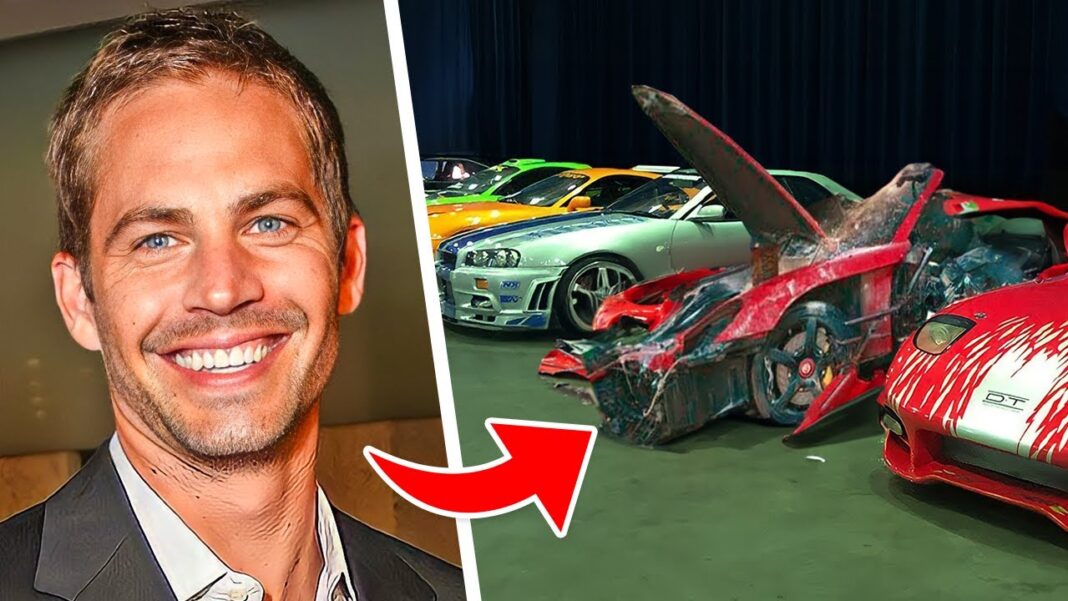
The car accident Paul Walker endured on November 30, 2013, remains one of Hollywood’s most heartbreaking losses. Paul Walker, the charismatic star best known for his role as Brian O’Conner in the Fast & Furious franchise, was only 40 years old when his life was cut short in a fiery crash that shocked fans worldwide. This article delves into a detailed timeline of that fateful day, piecing together events from eyewitness accounts, official investigations, and coroner’s reports to provide a comprehensive look at the sequence of events leading up to, during, and immediately after the tragedy. The car accident Paul Walker was involved in not only ended the life of a beloved actor but also that of his close friend Roger Rodas, highlighting the dangers of high-speed driving in a powerful sports car.
Paul William Walker IV was born on September 12, 1973, in Glendale, California. He rose to fame in the late 1990s with roles in films like Varsity Blues and She’s All That, but it was his portrayal of the undercover cop-turned-street racer in 2001’s The Fast and the Furious that catapulted him to international stardom. By 2013, the franchise had become a global phenomenon, with Walker starring in six of the films. Off-screen, Walker was deeply committed to philanthropy. He founded Reach Out Worldwide (ROWW) in 2010 after the devastating Haiti earthquake, an organization dedicated to providing disaster relief. It was this commitment that brought him to the event on that tragic day. Walker’s personal life was equally grounded; he was a devoted father to his 15-year-old daughter, Meadow, and shared a passion for cars and racing with friends like Rodas.
The morning of November 30, 2013, started like any other for Walker. He was at home in Southern California, spending time with his mother, Cheryl Walker, and his daughter, Meadow. According to later interviews, Walker discussed plans to buy a Christmas tree with his mother that day, a simple family activity that underscored his down-to-earth nature amid his celebrity status. A text message reminder about the upcoming charity event prompted him to shift gears. The event was a toy drive hosted by ROWW at Always Evolving, a high-performance automotive shop in Valencia, Santa Clarita, co-owned by Walker and Rodas. The purpose was to raise funds and collect donations for victims of Typhoon Haiyan, which had ravaged the Philippines earlier that month. Walker, ever the humanitarian, made it a priority to attend.
By early afternoon, Walker arrived at the shop located in the business park near the 28300 block of Rye Canyon Loop. The atmosphere was festive yet purposeful, with attendees including friends, employees, and Rodas’ young son. Walker mingled with guests, posing for photos and engaging in conversations about cars—a passion that bonded him with Rodas, whom he had met at a California race club. One notable interaction was with his friend Jim Torp, who later recounted to ABC News that Walker said, “Hey, I’ll be right back in 5 minutes,” as he prepared to leave for a quick drive. These would tragically become some of his last words.
Around 3:00 p.m., Walker and Rodas decided to take the red 2005 Porsche Carrera GT for a spin. Rodas, a 38-year-old financial advisor and experienced racer, was behind the wheel, with Walker in the passenger seat. The Carrera GT, a supercar known for its raw power and handling challenges, had an aftermarket exhaust system that boosted its horsepower, making it even more potent. They planned a short test drive, perhaps to demonstrate the car’s capabilities on a nearby curve popular for drifting. The pair left the shop in good spirits, waving to onlookers as they pulled out onto Hercules Street.
At approximately 3:26 p.m., disaster struck. The Porsche was traveling northbound on Hercules Street near Kelly Johnson Parkway, in a 45 mph speed zone. Official investigations later determined the vehicle was moving at speeds between 80 and 93 mph, though some reports, including the coroner’s, estimated it at over 100 mph. For unknown reasons—attributed primarily to unsafe speed for the roadway conditions—Rodas lost control while navigating a slight curve. The car veered off the road, striking a curb and sidewalk first. This initial impact caused the vehicle to partially spin and collide with a tree on the driver’s side.
The force was immense. The Porsche then hit a concrete lamp post, spinning 180 degrees and continuing eastward. The passenger side—where Walker sat—slammed into another tree, exacerbating the damage. Within seconds, the car burst into flames, fueled by the ruptured fuel system and the high-impact crash. Eyewitnesses, including employees from the shop and Rodas’ son who heard the explosion-like sound, rushed to the scene. Friends desperately tried to extinguish the fire using available fire extinguishers, but the inferno was too intense, and the occupants were trapped inside.
By 3:30 p.m., the crash was over, but the horror was just beginning. Emergency services, including the Los Angeles County Fire Department, arrived shortly after. At 3:38 p.m., Captain Hitchcock from Engine 156 officially pronounced both men dead at the scene. The bodies were burned beyond recognition, requiring dental records for identification. Rodas died instantly from multiple traumatic injuries, including severe blunt force trauma to the head, neck, and chest. Walker, however, suffered combined traumatic and thermal injuries; autopsy reports revealed fractures to his jaw, collarbone, pelvis, ribs, and spine, with evidence of soot in his trachea indicating he was alive and breathing during the initial moments of the fire. Toxicology tests confirmed no alcohol or drugs in either man’s system, ruling out impairment.
The car accident paul walker faced was investigated thoroughly by the Los Angeles County Sheriff’s Department, with assistance from the California Highway Patrol’s Multi-disciplinary Accident Investigation Team (MAIT). Experts examined the Porsche’s mechanical systems, finding no pre-existing failures. However, the tires were over nine years old, contributing to the loss of control, and the aftermarket modifications may have amplified the risks. There was no evidence of drag racing, mechanical sabotage, or involvement of a second vehicle. Security footage and witness statements corroborated the sequence, emphasizing speed as the primary factor.
In the immediate aftermath, news of the car accident Paul Walker spread rapidly. By evening, Walker’s official social media accounts confirmed the tragedy: “It is with a truly heavy heart that we must confirm that Paul Walker has passed away today in a tragic car accident while attending a charity event.” Fans and celebrities alike were stunned. Vin Diesel, Walker’s co-star and close friend, posted tributes, calling him a brother. The crash site on Hercules Street became a makeshift memorial overnight, with flowers, candles, and Fast & Furious memorabilia piling up.
The ripple effects were profound. Production on Furious 7, which was halfway through filming, halted indefinitely as Universal Pictures grappled with the loss. Walker’s brothers, Cody and Caleb, stepped in to complete his scenes using body doubles and CGI, ensuring the film honored his legacy. Released in 2015, it included a poignant tribute with the song “See You Again” by Wiz Khalifa and Charlie Puth, which became a chart-topping hit.
Legal ramifications followed the car accident Paul Walker. In 2014, Walker’s father filed a claim against Rodas’ estate over shared vehicle assets. More significantly, in 2015, Meadow Walker sued Porsche, alleging design defects in the Carrera GT, such as instability and inadequate safety features. Porsche countered that the car was misused at high speeds, but settlements were reached out of court in 2016 and 2017, including a $10.1 million payout to Meadow. Rodas’ widow also sued but lost in court.
Walker’s funeral was private; he was cremated and interred at Forest Lawn Memorial Park in Hollywood Hills on December 14, 2013. His legacy endures through ROWW, now run by his brother Cody, and the Fast & Furious series, which continues to reference his character. The car accident Paul Walker symbolizes the ironic cruelty of life— a man who lived for speed, taken by it too soon.
The events of November 30, 2013, serve as a stark reminder of road safety. Excessive speed, even in a controlled environment, can turn deadly in an instant. Walker’s story, from his humble beginnings to his untimely end, inspires reflection on living purposefully, as he did through his acting, fatherhood, and charity work.
FAQ: Paul Walker’s Car Accident
- When did Paul Walker’s car accident occur? The accident happened on November 30, 2013, at approximately 3:30 p.m. in Valencia, Santa Clarita, California.
- Who was driving the car in the accident? Roger Rodas, a friend and business partner of Walker, was driving the 2005 Porsche Carrera GT, with Walker as the passenger.
- What caused the crash? The primary cause was excessive speed (estimated 80-100+ mph in a 45 mph zone), combined with old tires. No drugs, alcohol, or mechanical failures were involved.
- Were there any survivors? No, both Paul Walker and Roger Rodas died at the scene from traumatic injuries and burns.
- What was Paul Walker doing before the accident? He was attending a charity toy drive for his organization, Reach Out Worldwide, to support Typhoon Haiyan victims.
- Did the accident lead to any lawsuits? Yes, Walker’s daughter, Meadow, sued Porsche for design defects, settling out of court. Other related claims were also filed.
- How did the accident affect the Fast & Furious franchise? Filming of Furious 7 was paused, and Walker’s brothers helped complete his scenes. The film included a tribute to him.
- Where is Paul Walker buried? He was cremated, and his ashes were interred at Forest Lawn Memorial Park in Hollywood Hills.

