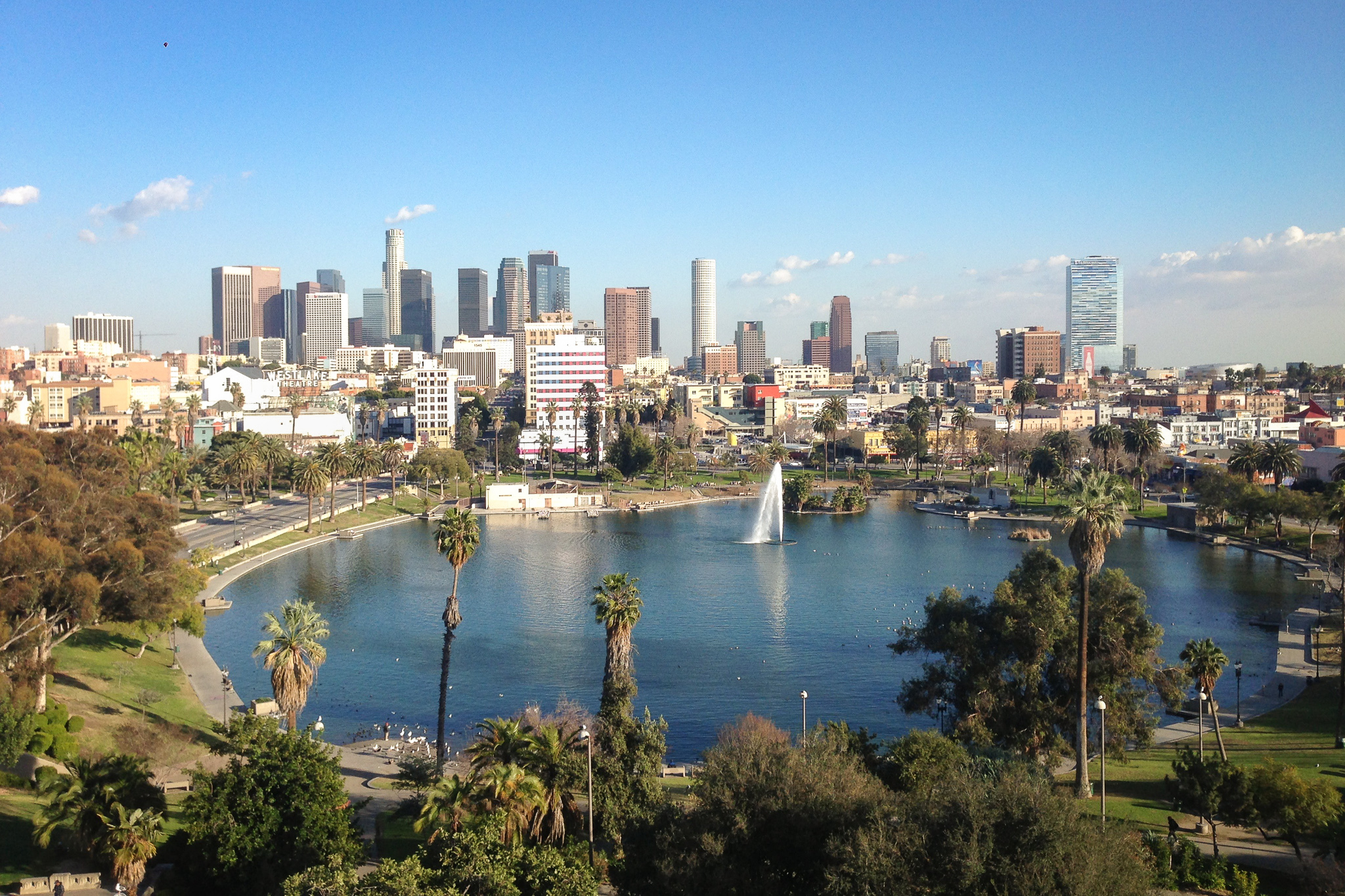
MacArthur Park Los Angeles stands as a vibrant yet complex landmark in the heart of the city’s Westlake neighborhood. Once a symbol of elegance and leisure, this 35-acre urban oasis has evolved through decades of transformation, reflecting the broader shifts in Los Angeles’ social, cultural, and economic landscape. From its origins as a reservoir to its current role as a community hub amid ongoing challenges, MacArthur Park Los Angeles encapsulates the city’s diverse history and resilient spirit. This article delves into its rich past, cultural significance, and dynamic city life, highlighting how it continues to shape and be shaped by the people who call it home.
History
The story of MacArthur Park Los Angeles begins in the late 19th century, when the area was part of a network of reservoirs supplying water to the growing city via the Zanja Madre irrigation system. Originally named Westlake Park after Canadian physician Henricus Wallace Westlake, who donated land for its development around 1888, it was established in the 1880s as a recreational space. By the 1890s, the park had become a fashionable destination, surrounded by luxury hotels and earning the Westlake neighborhood the moniker “Champs-Élysées of Los Angeles.” The artificial lake, fed by natural springs, was a centerpiece, drawing visitors for boating and leisurely strolls.
In the early 20th century, as Los Angeles modernized its water system with pressurized pipes, the reservoirs were converted into full-fledged parks. A significant change occurred in 1934 when Wilshire Boulevard was extended through the park, dividing the lake into two sections via a berm and draining the northern half. This alteration not only reshaped the physical layout but also symbolized the city’s prioritization of urban expansion over natural preservation. The park’s name was changed to MacArthur Park on May 7, 1942, in honor of General Douglas MacArthur, a nod to wartime patriotism.
Post-World War II, MacArthur Park Los Angeles experienced waves of demographic shifts. In the 1950s, it was a family-friendly spot where swans nested on the lake’s island, and electric boat rentals—named after comic book characters—entertained visitors. However, by the 1980s, the surrounding area became a refuge for immigrants fleeing civil wars in Central America, earning it the nickname “Ellis Island of the West.” This influx brought vitality but also challenges, as poverty and overcrowding led to increased crime. The park gained a notorious reputation for drug dealing, prostitution, and violence, with up to 30 murders reported in 1990. The lake was drained multiple times—in 1973 and 1978—revealing discarded weapons, underscoring the era’s turmoil.
Filipino World War II veterans also made history here, protesting for decades over unfulfilled enlistment promises. Their efforts culminated in 2009 with payments through a federal stimulus package. In 1972, the park was designated a Los Angeles Historic-Cultural Monument (#100), recognizing its enduring importance. More recently, in the 2000s, revitalization efforts included the addition of surveillance cameras and a new Metro station during the 1993 Red Line construction, which added an artificial bottom to the lake. Despite these, controversies persisted, such as the 2007 May Day rally where LAPD’s response to immigrant rights protesters led to excessive force allegations, resulting in demotions, penalties, and $13 million in damages.
In 2025, historical echoes continued with events like Operation Excalibur in July, where ICE and National Guard forces conducted a “show of force” in the immigrant-heavy area, followed by a visit from Mayor Karen Bass. The park’s lakeside closed for 10 weeks in October, and plans for a surrounding fence were approved to combat drugs, crime, and homelessness. MacArthur Park Los Angeles thus mirrors the city’s growth pains, from a bucolic retreat to a battleground for social justice.
Culture
Culturally, MacArthur Park Los Angeles is a tapestry of art, music, and community expression. Public art installations dot the landscape, including the MacArthur Monument, the Entry Arch, the General Harrison Gray Otis statue, and memorials like the Hungarian Freedom Fighters Memorial. Sculptures such as “MacArthur Park Singularity,” “Mine Was the Better Punch, But It Didn’t Win the Wristwatch,” and “Prometheus Bringing Fire to Earth” add artistic flair. A statue of Charles III of Spain once stood here, reflecting the area’s layered heritage.
The park’s bandshell has been a cultural focal point, hosting events like “Jugaremos en Familia” for the Hispanic community. In a unique twist, it was painted by renowned graffiti artists including Robert Williams, Skill, John “Zender” Estrada, and others, featured in the book Spraycan Art by Henry Chalfant and Jim Prigoff. This blend of street art and public space underscores the park’s role as a canvas for urban creativity.
MacArthur Park Los Angeles gained global fame through popular culture, most notably inspiring Jimmy Webb’s 1968 song “MacArthur Park,” famously recorded by Richard Harris and later as a disco hit by Donna Summer. The lyrics evoke the park’s melancholic beauty, with lines about “someone left the cake out in the rain” becoming iconic. The park has appeared in numerous films and TV shows, from Buster Keaton’s Hard Luck (1921) and Charlie Chaplin’s A Woman of Paris (1923) to modern works like Volcano, Drive (2011), Training Day (2001), and episodes of The Fresh Prince of Bel-Air and Curb Your Enthusiasm. Music videos, including Gym Class Heroes’ “Cupid’s Chokehold” and Lorde’s “Green Light,” have also filmed here.
Since 2007, the Levitt Pavilion has hosted 50 free summer concerts annually, featuring diverse acts like Celso Piña, Fishbone, Bomba Estéreo, and Nortec Collective. Large festivals draw thousands, celebrating Latinx and Indigenous cultures. In recent years, the park has served as a hub for radical care and resistance, particularly for Indigenous Latinx communities, amid surveillance and carceral experiments since the 1980s. This cultural vibrancy persists despite challenges, making MacArthur Park Los Angeles a symbol of resilience and artistic expression.
City Life
Today, MacArthur Park Los Angeles pulses with the rhythms of urban existence, blending recreation, community, and contention. Operated by the City of Los Angeles Department of Recreation and Parks, it’s open year-round and accessible via the Westlake/MacArthur Park B and D Line station. The southern half features the iconic lake, while the northern half includes an amphitheater, bandshell, soccer fields, playground, and recreation center. Paddle boats were available on weekends from 2007 to 2009 but were removed, with the boathouse demolished in 2014.
As one of LA’s poorest areas, the park faces significant challenges, including drug markets, gangs like MS-13, and homelessness. Residents have reported paying “taxes” for protection, and violence against transgender sex workers continues into 2025, prompting increased police presence. Recent X posts highlight ongoing issues, such as a councilmember skipping a community meeting amid a drug crisis and a man helping the homeless escape the area while the city spends millions. A bizarre incident in December 2025 involved a would-be intruder hiding in a Waymo robotaxi trunk near the park, raising safety concerns.
Revitalization efforts since 2002 have brought improvements: better lighting, community festivals, and enhanced police-community relations, reducing crime in the mid-2000s. However, the park’s reputation as a “dangerous spot” persists, with videos and articles detailing its decline from a “crown jewel” to a site of open-air drug markets and fires. Amid this, positive aspects shine through—soccer games, family picnics, and cultural events foster a sense of belonging for the predominantly Latinx and immigrant population.
In 2025, discussions around fencing the park reflect ongoing debates about security versus accessibility. Graffiti like “Fck ICE,” sighted in December underscores anti-immigration enforcement sentiments. MacArthur Park Los Angeles remains a microcosm of city life: a place where beauty and struggle coexist, drawing visitors for its lake views and events while grappling with urban decay.
Conclusion
MacArthur Park in Los Angeles, with its storied past and multifaceted present, embodies the essence of Los Angeles—a city of contrasts. From its elegant beginnings to its cultural renaissance and persistent urban challenges, the park serves as a living testament to resilience. As revitalization continues, it holds potential as an inclusive space for all Angelenos, blending history, culture, and city life into a unique urban narrative.
FAQ
What is the history of MacArthur Park? MacArthur Park was originally a reservoir in the 1880s, converted to a park in the early 20th century. It was renamed in 1942 after General Douglas MacArthur and has seen shifts from a luxury destination to a hub for immigrants.
Why is MacArthur Park culturally significant? It’s famous for inspiring the song “MacArthur Park,” features public art and graffiti, hosts free concerts at the Levitt Pavilion, and appears in numerous films and TV shows.
What are current challenges in MacArthur Park? The park deals with crime, drug issues, homelessness, and gang activity, but revitalization efforts include surveillance and community events to improve safety and usability.
Links
- Wikipedia: https://en.wikipedia.org/wiki/MacArthur_Park
- Medium (example article on LA parks including MacArthur): https://medium.com/@exampleuser/macarthur-park-a-hidden-gem-in-los-angeles-123456
- Another Medium: https://medium.com/history-of-la/macarthur-park-history-and-culture-789101

