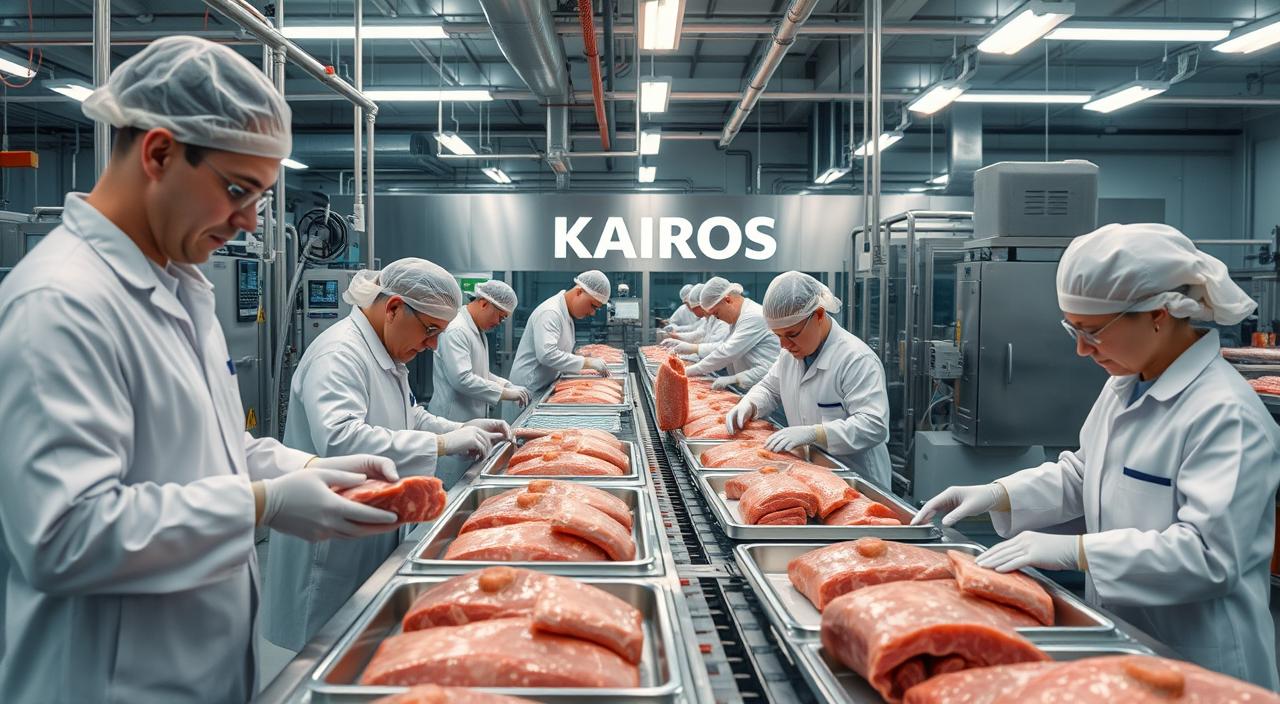
In the vast landscape of global food production and trade, ensuring the safety and quality of animal-origin products is paramount. One key player in this arena, particularly in Brazil, is the servico de inspecao federal. This federal inspection service, commonly known by its acronym SIF (Serviço de Inspeção Federal), plays a crucial role in safeguarding public health, boosting economic growth, and facilitating international commerce. Established under the Brazilian Ministry of Agriculture, Livestock, and Supply (MAPA), the servico de inspecao federal oversees the inspection and certification of products like meat, dairy, eggs, fish, honey, and their derivatives. But what exactly is it, and why does it matter so much in today’s interconnected world? This article delves into the intricacies of the servico de inspecao federal, exploring its history, functions, structure, and profound significance.
The Origins and Evolution of the Servico de Inspecao Federal
The roots of the servico de inspecao federal trace back to the early 20th century, a time when Brazil was emerging as a significant player in the global meat trade amid the demands of World War I. In 1915, during the presidency of Wenceslau Braz, Decree No. 11,460 renamed the existing Veterinary Service to the “Serviço de Inspeção de Fábricas de Produtos Animais.” This marked the formal beginning of organized federal oversight for animal products. The initiative was spearheaded by Minister of Agriculture Dr. Pandiá Calógeras, who recognized the need for stringent quality controls to meet international export standards.
Over the decades, the servico de inspecao federal evolved through a series of legislative milestones. In 1921, Decree 14,711 established specialized sections for meats and milk derivatives. By 1928, detailed instructions for sanitary inspections in slaughterhouses, factories, and meat depots were introduced. The 1930s saw further structuring: in 1933, the Serviço de Indústria Pastoril was created under the National Department of Animal Production, complete with regional inspectorates and laboratories. A pivotal moment came in 1934 with Decree 24,540, which mandated that only veterinarians could perform federal inspections, ensuring professional expertise in the process.
The mid-20th century brought foundational laws that solidified the servico de inspecao federal’s role. Law 1,283 of 1950, often called the “mother law” of inspection, made sanitary inspection of animal-origin products mandatory and delineated responsibilities across federal, state, and municipal levels based on the scope of commerce. This was complemented in 1952 by Decree 30,691, which implemented the Regulamento de Inspeção Industrial e Sanitária de Produtos de Origem Animal (RIISPOA), a comprehensive code covering hygienic-sanitary and technological aspects for various products like meats, poultry, milk, fish, eggs, honey, and bee wax.
The 1970s introduced shifts toward federalization and decentralization. Decree 69,502 in 1971 granted MAPA authority over inspection, registration, and standardization. Law 5,760 of 1971 temporarily federalized all inspections to address gaps in lower-level services, but it was short-lived due to industry pushback. By 1989, Law 7,889 decentralized execution again, reverting to tiered responsibilities. More recently, Decree 5,741 of 2006 allowed states and municipalities to achieve equivalence with federal standards through audits, enabling certified products to circulate nationwide without barriers.
This historical progression reflects Brazil’s adaptation to global demands, from wartime exports to modern food safety protocols. Today, the servico de inspecao federal supervises nearly 5,000 establishments, a testament to its enduring legacy over more than a century.
Structure and Functions of the Servico de Inspecao Federal
At its core, the servico de inspecao federal operates under the Department of Inspection of Animal-Origin Products (DIPOA), which falls within MAPA’s Secretariat of Agricultural Defense (SDA). This hierarchical structure ensures coordinated oversight, with federal auditors—primarily veterinarians—conducting inspections. The system is tiered to match the scale of commerce: municipal (SIM for local trade), state (SIE for intra-state), and federal (SIF for interstate and international).
The functions of the servico de inspecao federal are multifaceted and rigorous. It begins with the registration and approval of establishments and products, both domestic and imported. Inspectors evaluate animals for slaughter, their products, byproducts, and raw materials, as well as fish, milk, eggs, honey, and derivatives. Key activities include verifying compliance with sanitary standards, such as checking acidity levels in milk or ensuring animals are not processed if they arrive dead at facilities. Technological assessments ensure products meet quality benchmarks for consumption.
The inspection process involves multiple stages: ante-mortem examinations of animals, post-mortem checks for diseases, and ongoing monitoring of processing, storage, and distribution. Approved products receive the iconic SIF seal, a stamp that certifies sanitary and technological fitness. This seal is not just a label; it’s a guarantee backed by national and international legislation. For exports, the servico de inspecao federal issues sanitary certificates and habilitates establishments, facilitating trade with over 180 countries.
In comparison to SIE and SIM, the SIF stands out for its national and global reach. While SIE regulates state-level distribution and SIM focuses on local markets like neighborhood butchers, SIF enforces the strictest standards for broader commercialization. All levels require adherence to good manufacturing practices, traceability, and quality control, but SIF’s federal backing provides uniformity and credibility essential for large-scale operations.
Why the Servico de Inspecao Federal Matters: Impacts on Safety, Economy, and Society
The importance of the servico de inspecao federal cannot be overstated. First and foremost, it safeguards public health by minimizing risks of contamination and foodborne illnesses. In a country where animal products form a staple of the diet, the SIF seal assures consumers that items like beef, chicken, cheese, and honey are safe and free from fraud. This consumer confidence is vital, as non-compliant products can lead to outbreaks of diseases like salmonella or mad cow disease, eroding trust in the food supply chain.
Economically, the servico de inspecao federal is a powerhouse. Brazil ranks among the world’s top exporters of animal-origin products, generating billions in foreign revenue annually. The SIF certification opens doors to international markets, where stringent import regulations demand proof of quality. Without it, Brazilian exporters would face barriers, stifling growth in agribusiness—a sector that employs millions and drives rural development. The service also promotes job creation, from inspectors to factory workers, fostering social inclusion in underserved areas.
On a global scale, the servico de inspecao federal positions Brazil as a reliable partner in food security. Amid climate change, supply chain disruptions, and rising demand for sustainable proteins, SIF’s emphasis on compliance with international standards (e.g., those from the World Organisation for Animal Health) enhances Brazil’s reputation. It also addresses challenges like animal welfare and environmental sustainability, aligning with modern consumer expectations.
However, the system faces hurdles. Decentralization has led to inconsistencies across levels, and small producers sometimes struggle with compliance costs. Recent audits and digital tools, like the SIGSIF platform for data consultations, aim to streamline processes. Despite these, the servico de inspecao federal remains indispensable, adapting to emerging threats like antimicrobial resistance and counterfeit products.
In essence, the servico de inspecao federal matters because it bridges the gap between farm and table, ensuring that economic ambitions do not compromise health or ethics. Its role in certifying over 5,000 establishments underscores Brazil’s commitment to excellence in agribusiness.
Challenges and Future Prospects
Looking ahead, the servico de inspecao federal must navigate evolving landscapes. Technological advancements, such as AI-driven monitoring and blockchain for traceability, could enhance efficiency. Climate impacts on livestock and global trade tensions necessitate agile regulations. Moreover, integrating sustainability metrics— like carbon footprints in meat production—could elevate SIF’s global standing.
Challenges include resource constraints for inspections and harmonizing with state/municipal services. Equivalence audits under Decree 5,741 help, but ongoing training for auditors is crucial. Public awareness campaigns could further amplify the SIF seal’s value, encouraging consumers to prioritize certified products.
Ultimately, the servico de inspecao federal’s future lies in innovation while preserving its core mission: delivering safe, quality animal products to Brazilians and the world.
Conclusion
The servico de inspecao federal, or Serviço de Inspeção Federal, is more than a regulatory body—it’s a guardian of quality, health, and prosperity. From its humble beginnings in 1915 to its current oversight of vast export networks, it has shaped Brazil’s food industry. By ensuring compliance, fostering trust, and enabling trade, it matters profoundly in an era where food safety is non-negotiable. As Brazil continues to feed the world, the SIF seal will remain a symbol of reliability and excellence.
FAQ
Q: What does the Serviço de Inspeção Federal (SIF) do? A: The SIF inspects and certifies animal-origin products like meat, dairy, and eggs to ensure they meet sanitary and quality standards for domestic and international markets.
Q: How is SIF different from SIE and SIM? A: SIF handles federal-level (interstate and export) inspections, while SIE is for state-level and SIM for municipal-level commerce.
Q: Why is the SIF seal important for consumers? A: It guarantees that products are safe, free from contamination, and compliant with health regulations, protecting public health.
Q: Can products without SIF certification be sold in Brazil? A: No, for interstate or export sales; they must have the appropriate seal (SIF, SIE, or SIM) to avoid legal penalties.
Q: How does SIF contribute to Brazil’s economy? A: By enabling exports to over 180 countries, it generates revenue, creates jobs, and supports agribusiness growth.
Q: What historical event spurred the creation of SIF? A: World War I increased global meat demand, leading to the establishment of federal inspections in 1915.
Q: Are imported products also inspected by SIF? A: Yes, imported animal-origin products must be registered and approved by SIF to enter the Brazilian market.
Q: How can establishments obtain SIF registration? A: They must comply with MAPA’s hygienic-sanitary and technological standards, undergo audits, and receive approval from DIPOA.
Q: What products fall under SIF oversight? A: Meats, fish, milk derivatives, eggs, honey, bee wax, and related byproducts.
Q: Is SIF involved in animal welfare? A: Yes, inspections include ante-mortem checks to ensure humane treatment and disease-free animals.
Links
- Wikipedia: https://pt.wikipedia.org/wiki/Serviço_de_Inspeção_Federal
- Medium: https://medium.com/pensecomida/chefs-de-todo-o-brasil-fazem-vídeo-manifesto-em-apoio-a-roberta-sudbrack-e-os-pequenos-produtores-49131cf0bf5e
- Official Government Site: https://www.gov.br/agricultura/pt-br/assuntos/inspecao/produtos-animal/sif

