Modern industries constantly search for smarter materials. Manufacturers want stronger composites, lighter components, and longer product lifespans. At the same time, engineers must control costs and simplify processing. Because of these challenges, nanomaterials now play a major role in performance enhancement.
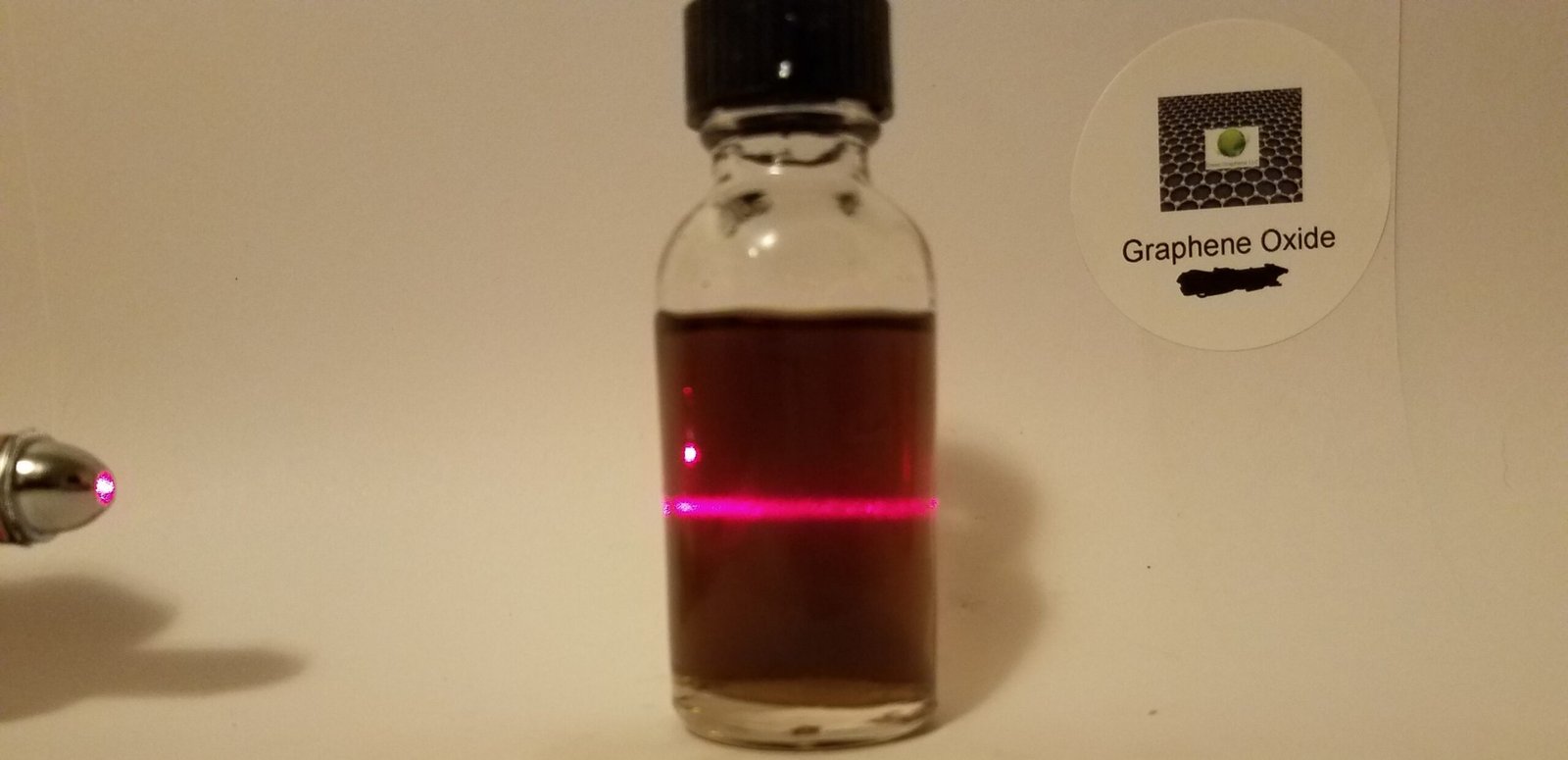
Among these solutions, graphene oxide dispersion (GOD) offers a practical and scalable approach. Instead of handling dry powders, industries can integrate graphene oxide in liquid form. This improves mixing, stability, and overall effectiveness. As a result, dispersion technology makes graphene oxide easier to use across coatings, polymers, cement systems, and energy devices.
In this article, we explore how Graphene Oxide Dispersion improves mechanical, thermal, and barrier properties. We also examine real-world applications and practical implementation tips.
What Is Graphene Oxide Dispersion?
Graphene oxide contains thin carbon sheets decorated with oxygen functional groups. These groups allow strong interaction with water and other polar solvents. Because of this property, graphene oxide disperses easily in liquid media.
Graphene oxide dispersion refers to uniformly distributed graphene oxide sheets suspended in a solvent. This format eliminates the need for aggressive mechanical mixing of dry material. Instead, manufacturers can directly blend the dispersion into polymers, coatings, or cement slurries.
Uniform dispersion is critical. When sheets are distributed evenly, they create consistent reinforcement throughout the material. However, poor dispersion leads to agglomeration and weak performance.
Therefore, dispersion technology acts as a bridge between laboratory-scale innovation and industrial-scale production.
Mechanical Strength Enhancement
One of the strongest advantages of Graphene Oxide Dispersion involves mechanical reinforcement. When engineers add the dispersion to polymer matrices, the sheets spread evenly across the structure.
Because graphene oxide has a high aspect ratio, it forms a strong interfacial network. This network improves stress transfer between filler and matrix. As a result, tensile strength and impact resistance increase.
In epoxy systems, small percentages of dispersion improve crack resistance. In polyurethane coatings, uniform sheet distribution enhances scratch resistance. Cement-based materials also benefit from improved microstructure control.
Additionally, dispersion reduces the risk of particle clustering. Clusters weaken mechanical properties. Even distribution ensures consistent reinforcement. Always test compatibility between the dispersion solvent and the base material. Solvent mismatch can affect curing or viscosity.
Thermal Conductivity and Heat Stability
Heat control remains critical in electronics and battery systems. Excess heat shortens component lifespan. Therefore, materials must dissipate heat efficiently.
Graphene oxide sheets create conductive pathways inside polymer systems. When dispersed properly, they improve thermal transfer across the material. Although graphene oxide does not match pristine graphene in conductivity, it still enhances heat flow compared to standard fillers.
Battery casings benefit from improved heat management. LED housings maintain more stable operating temperatures. Coating systems exposed to sunlight show improved thermal resistance.
In addition, the dispersion format allows easier platelet alignment during processing. Proper orientation increases in-plane heat conduction. Use moderate shear mixing during integration. Excessive shear may break sheet structures and reduce thermal benefits.
Barrier Properties and Corrosion Resistance
Graphene oxide sheets act as physical barriers within coatings and films. When evenly distributed, they create a tortuous path that slows moisture and gas penetration.
This barrier effect improves corrosion resistance in metal coatings. Steel structures exposed to harsh environments benefit from extended protection. Packaging films also gain from reduced oxygen transmission.
Graphene Oxide Dispersion supports uniform film formation. Even sheet distribution ensures consistent barrier coverage across large surfaces. Because of improved barrier performance, industries reduce maintenance cycles and extend service life.
Electrical and Functional Performance
Although graphene oxide is less conductive than reduced graphene forms, it still improves electrical behavior when processed correctly.
In conductive coatings, engineers often reduce graphene oxide after application. Uniform dispersion ensures even reduction and stable conductive networks.
Energy storage systems also benefit. Electrodes prepared with dispersion-based mixing show better surface contact and ion transport.
Because dispersion improves sheet separation, electrochemical performance becomes more consistent. This leads to improved cycling stability in laboratory testing.
Real Applications Across Industries
Coatings Industry
Protective coatings require durability and corrosion resistance. Graphene Oxide Dispersion enhances barrier properties and mechanical strength. As a result, marine and industrial coatings last longer under harsh conditions.
Construction Materials
Concrete systems reinforced with dispersion-based graphene oxide show improved crack control. The sheets refine the microstructure during hydration. This increases compressive strength and durability.
Polymer Manufacturing
Manufacturers integrate dispersion into thermoplastics and thermosets. This improves tensile strength and surface hardness without major processing changes.
Energy Storage
Battery and supercapacitor developers use dispersion to prepare uniform electrode slurries. Evenly distributed sheets improve charge transport and structural stability.
Sustainability and Efficiency Benefits
Sustainability drives material innovation. Because dispersion improves reinforcement efficiency, manufacturers use lower filler percentages. This reduces raw material usage. Improved durability also lowers replacement frequency. Longer product lifespan reduces environmental impact over time. Water-based dispersion systems further support eco-friendly processing. They reduce reliance on hazardous solvents.
Best Practices for Industrial Integration
To maximize performance benefits, follow structured guidelines:
- Verify solvent compatibility with your base matrix.
- Control mixing speed to maintain sheet integrity.
- Conduct pilot-scale testing before full production.
- Monitor viscosity and curing behavior during blending.
- Maintain consistent storage conditions to prevent sedimentation.
Proper storage plays an important role. Although dispersion improves usability, long storage periods may require gentle agitation before use. Quality control testing ensures consistent sheet concentration and stability.
Future Outlook
Production methods continue to improve. As manufacturing scales increase, cost efficiency improves. Therefore, broader industrial adoption becomes more realistic.
Hybrid systems that combine graphene oxide with other nanomaterials show promising results. These combinations may enhance multifunctional properties such as mechanical strength and conductivity simultaneously.
In addition, advanced coating systems and printable electronics create new opportunities for dispersion-based formulations. As industries demand stronger and more durable materials, graphene oxide dispersion will remain an important tool for scalable performance enhancement.
Conclusion
Graphene oxide dispersion transforms advanced nanomaterials into practical industrial solutions. It improves mechanical strength, thermal stability, barrier protection, and functional performance across multiple sectors.
Because dispersion ensures uniform sheet distribution, materials achieve consistent reinforcement without complex processing. Industries benefit from improved durability, better efficiency, and reduced environmental impact.
From coatings and construction to energy storage and polymers, dispersion-based graphene oxide continues to demonstrate real performance gains. When manufacturers apply proper integration techniques and quality control measures, they unlock the full potential of this versatile material technology.