


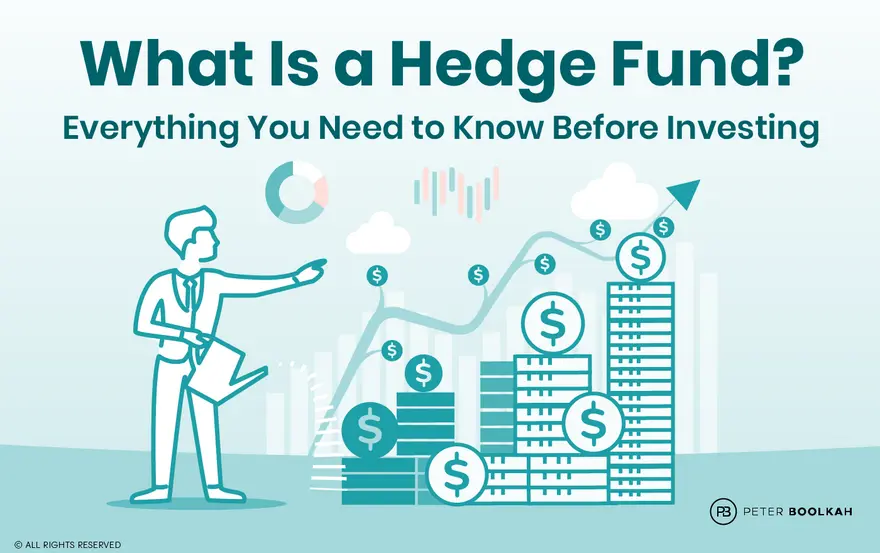
A Fund of Hedge Funds is an investment structure that does not buy individual stocks or bonds directly. Instead, it allocates capital into several underlying hedge funds, creating a layered portfolio that aims to spread exposure across managers, strategies, and market approaches. In the broad regulatory sense, funds that primarily invest in other funds are commonly called funds of funds, and U.S. regulators describe them as tools that can support asset allocation and diversification goals. In the hedge-fund version, that idea is applied to a basket of hedge funds rather than a single manager.
Table of Contents
ToggleThat structure appeals to many investors because it combines manager selection, portfolio construction, and risk spreading in one vehicle. At the same time, it introduces additional cost layers, more complex oversight, and a need for stronger due diligence. In other words, the design can be useful, but the usefulness depends on the quality of the managers chosen, the discipline of the strategy, and the clarity of the fee structure.
What a Fund of Hedge Funds Actually Is
A Fund of Hedge Funds is best understood as a “manager of managers” model. Rather than selecting one trading team and putting all capital behind it, the fund allocates across several hedge funds that may follow different styles such as long-short equity, macro, event-driven, or arbitrage-oriented approaches. The goal is not to predict one perfect strategy. The goal is to build a portfolio that can behave more smoothly across different market conditions. Wikipedia’s overview of fund of funds notes that a hedge-fund version is designed to provide broad exposure and diversify the risks tied to any single underlying fund.
This is why the model is often discussed alongside diversification and portfolio construction. A single hedge fund can succeed or struggle based on one manager’s decisions, one style bias, or one period of market pressure. A diversified structure may reduce dependence on a single outcome. That said, diversification is not a magic shield. It lowers concentration risk, but it does not remove market risk, manager risk, or structural fee drag.
Why Investors Use This Structure
The biggest attraction is access. Some investors want broad exposure to hedge fund talent without researching and monitoring many separate mandates on their own. A fund of funds can centralize that work. It can also give exposure to managers who may otherwise be difficult to access individually, while offering a more balanced mix of strategies than a single fund can provide. Investment.gov explains that a fund may invest in other funds to seek improved asset allocation, diversification, or other investment objectives.
Another reason is smoother portfolio behavior. Hedge fund styles do not all move together. A macro strategy may perform differently from a merger-arbitrage strategy, and a volatility-sensitive approach may behave differently from a trend-following one. When a portfolio combines several styles, the result may be more stable than relying on one narrow approach. That is why the model is often attractive to institutions that care about capital preservation, liquidity planning, and long-term discipline.
A third reason is oversight. Instead of tracking many individual relationships, the investor relies on one team to research managers, monitor performance, replace weak allocations, and rebalance the mix over time. That convenience can be valuable, especially for organizations that do not have a large internal investment staff. The tradeoff is that the quality of the overseeing team matters a great deal, because poor selection at the top level affects every layer beneath it.
How the Structure Works in Practice
The process usually begins with manager research. The top-level fund evaluates hedge funds based on investment process, consistency, risk controls, portfolio transparency, operational strength, and alignment of interests. Once the selected funds are chosen, capital is allocated across them according to the parent fund’s objectives. Some allocations remain stable; others shift as managers are added, removed, or resized.
This structure can be unfettered or fettered in the broader fund-of-funds world. In plain language, that means some funds can invest only in related internal products, while others can allocate to outside managers as well. That distinction matters because it affects flexibility, diversification, and the universe of strategies available to the portfolio manager. The SEC’s framework for fund of funds arrangements exists to support this kind of structure while still protecting investors through conditions and disclosures.
In a hedge-fund version, the parent fund is responsible for constant assessment. It must decide whether a manager is still delivering on the intended role, whether the style is still complementary, and whether any underlying exposure has become too large. Good oversight turns a collection of funds into a coherent portfolio. Weak oversight turns it into a crowded and expensive stack of overlapping positions.
The Role of Manager Selection
Manager selection is the heart of the model. A fund of funds does not simply buy “hedge funds in general.” It makes judgments about which managers deserve capital and how much each one should receive. That means research quality matters as much as the strategies themselves. A strong manager-selection process looks at edge, discipline, risk management, team stability, and the ability to protect capital when conditions change.
This is one reason the model is sometimes called multi-manager investing. The skill is not only in picking winning managers. The skill is in combining them so that strengths complement one another. A portfolio can still disappoint if the underlying funds are too similar, too correlated, or too dependent on the same macro assumption. Smart construction is about balance, not just reputation.
The better funds of funds also pay attention to operational health. A manager may have a strong record, but weak controls, poor reporting, or unstable staffing can make that record less reliable. The structure works best when due diligence covers both performance and operations, because those two pieces are tied together in real-world investing.
Fees, Expenses, and the Real Cost of Layered Investing
Fees are where many investors become cautious. A Fund of Hedge Funds usually pays not only its own management and administrative expenses but also the expenses of the underlying hedge funds. That layering can reduce net returns. The SEC and Investor.gov both note that when a fund invests in other funds, the underlying fees must be disclosed, including acquired fund fees and expenses, often called AFFE.
This matters because even a good return gross of fees can look much less attractive after all layers are deducted. The structure may still be worth it for investors who value access, diversification, or professional manager selection, but the cost has to be justified by the result. Investors should always look at both the visible fund-level fee and the embedded cost of the underlying funds.
Fees also influence behavior. If managers know they are operating inside a costly wrapper, they need to produce a clear benefit such as better diversification, stronger downside control, or access to otherwise hard-to-reach strategies. Without that benefit, the extra cost can become a drag rather than a feature. This is why many investors compare the structure with simpler, lower-cost alternatives before committing capital.
Benefits That Make the Structure Attractive
The first benefit is diversification. By spreading exposure across several hedge funds, the portfolio may avoid heavy dependence on one strategy or one decision-maker. That can be especially useful when markets become uneven and different styles move in different directions. Diversification does not promise profits, but it can help reduce the impact of a single poor outcome.
The second benefit is access to expertise. Not every investor has the time or resources to study dozens of hedge funds, interview managers, review operational controls, and monitor style drift. A funds-of-funds team can do that work centrally. For institutions, that can free internal resources while still delivering a broad and professional investment process.
The third benefit is portfolio design. Because the top-level manager can add, remove, or resize underlying funds, the final portfolio can be shaped with purpose. That makes the structure useful for investors who care about risk budgets, capital preservation, or a deliberate mix of styles. A carefully built Fund of Hedge Funds is not just a pile of managers; it is a portfolio with a defined architecture.
Risks and Limitations You Should Not Ignore
The largest risk is complexity. More layers mean more moving parts, and more moving parts mean more room for misunderstanding. Investors need to know what is being owned, how it is being monitored, and which risks are actually being diversified versus simply moved around the structure.
The second risk is correlation. A portfolio may look diverse on paper, but many hedge funds can still react similarly during stress periods. If several managers depend on the same economic assumptions, liquidity conditions, or market themes, the portfolio may not behave as differently as expected. That is why true diversification requires more than holding many names. It requires looking beneath the surface.
The third risk is fee drag. Multiple layers of costs can reduce the investor’s net result. Even if the underlying managers perform well, the combined expenses may make the final outcome less compelling than a simpler structure would have produced. This is especially important for investors who are comparing alternatives on a net-return basis rather than a gross-return basis.
Taylor Swift Net Worth 2026: $2 Billion Success Secrets
Who May Consider It
This structure tends to fit investors who value delegated oversight. Institutions, endowments, foundations, and large allocators may use it when they want access to a broad range of hedge fund styles without building everything from scratch. The model is also attractive to investors who want a single professional team to handle selection, monitoring, and rebalancing.
It can also appeal to investors who are comfortable with complexity and willing to study expense ratios and strategy overlap carefully. That does not mean it is only for sophisticated buyers, but it does mean the structure works best when the investor understands the role it is supposed to play in the wider portfolio. A fund of funds should have a purpose, not just a label.
For some investors, the key question is not whether the structure is impressive. The real question is whether it solves a specific problem: too much concentration, insufficient diversification, limited internal research capacity, or a need for a more balanced style mix. When it answers one of those needs clearly, the structure becomes easier to justify.
How to Evaluate One Before Committing Capital
Start with the investment objective. A good review begins by asking what the portfolio is meant to do. Is it meant to reduce volatility, broaden strategy exposure, or access specialist managers? If the objective is unclear, the portfolio can drift. The SEC’s fund-of-funds framework emphasizes the role of structure and conditions, which makes clarity especially important.
Dave Chappelle Net Worth 2026: How the Comedy Icon Built Lasting Wealth
Next, examine the underlying managers. Look at how many funds are included, how concentrated the allocations are, whether the styles truly differ, and how the top-level team decides when to replace a manager. A strong selection process should be explainable, repeatable, and disciplined. If the process is vague, the results may be difficult to trust.
Then review the fees in plain language. Investors should understand the fund-level fee, the underlying fund expenses, and any performance-based charges. AFFE disclosure exists because the full cost matters. A transparent structure is easier to compare, easier to monitor, and easier to defend over time.
Comparing It with Direct Hedge Fund Investing
Direct hedge fund investing means placing capital with a single manager or a small number of managers. That can be simpler and may reduce one layer of cost. It also gives the investor a more direct line of sight into one style and one decision process. But it can create concentration in a single manager’s approach.
By contrast, a Fund of Hedge Funds spreads the work across several managers and relies on a top-level allocator to blend them. That can improve diversification and reduce the impact of any one weak strategy, but it also adds fee layering and a higher need for top-level skill. In practice, the best option depends on the investor’s goals, internal resources, and tolerance for complexity.
This is the core tradeoff. Direct investing can be leaner. Multi-manager investing can be broader. The right answer is not universal; it depends on whether the investor values simplicity or delegation, lower cost or broader coverage, concentrated conviction or diversified oversight.
Practical Lessons for Everyday Portfolio Thinking
Even if someone never invests in this structure, the idea behind it teaches useful lessons. Good portfolios are built with intention. Diversification should be meaningful, not random. Costs should be visible, not hidden. And manager selection should be based on process, not hype. Those ideas are useful in almost any asset class.
The model also reminds investors that ownership alone is not enough. A portfolio is not strong just because it contains many holdings. It is strong when the holdings work together, serve a defined purpose, and justify their cost. That principle applies whether the investor is building a simple savings plan or evaluating a more advanced allocation framework.
MrBeast Net Worth at around $2.6 billion
That is why the phrase Fund of Hedge Funds matters beyond its technical meaning. It represents a way of thinking about capital: combine skilled managers, control concentration, watch expenses, and keep the portfolio aligned with a clear objective. Used well, that mindset can improve decision-making across the whole investing process.
Conclusion
A Fund of Hedge Funds is a layered investment vehicle that allocates capital into multiple hedge funds rather than directly into securities. Its promise is broader diversification, easier access to specialist managers, and more structured portfolio oversight. Its cost is added complexity, fee layering, and the need for strong top-level manager selection. The SEC and Investor.gov both make clear that fund-of-funds arrangements are designed to support investment objectives such as asset allocation and diversification, while also requiring transparent disclosure of underlying costs.
For the right investor, that tradeoff can make sense. For the wrong investor, it can become an expensive detour. The best approach is to treat the structure as a tool, not a trend. A well-run multi-manager portfolio can be valuable, but only when the strategy, the managers, the fees, and the governance all fit together. That is the true meaning of Fund of Hedge Funds investing.