
Understanding how to read a Balance Sheet PDF is a fundamental skill for anyone involved in business, finance, or personal financial analysis. Whether you are a student, a business owner, an investor, or someone seeking to improve their financial literacy, learning to read a Balance Sheet PDF helps you interpret important financial data and make informed decisions about resource allocation, financial health, and performance indicators.
Table of Contents
ToggleIn this comprehensive guide, we will explore every aspect of a balance sheet, explain how to interpret and analyze a Balance Sheet PDF, and provide practical tips to understand what each element truly means. We’ll also link to related resources to deepen your knowledge.
Introduction To Balance Sheet Basics
A balance sheet is one of the core financial statements that shows a company’s financial position at a chosen moment in time. It reveals three main things:
- What the company owns – called assets
- What the company owes – called liabilities
- What remains for owners or shareholders – called equity
As the name implies, a balance sheet ‘balances’ because the total value of assets always equals the combined value of liabilities plus equity. This foundational rule is often written as:
Assets = Liabilities + Equity
This equation is central to financial accounting and bookkeeping.
Why Reading a Balance Sheet Is Important
Understanding a Balance Sheet PDF matters for several essential reasons:
- Financial Health Check: It provides a snapshot of a business’s financial condition at a specific date.
- Decision‑Making: Helps owners, managers, and stakeholders make strategic decisions with confidence.
- Comparative Insight: By comparing multiple Balance Sheet PDF reports over time, trends emerge showing growth, stability, or potential risk.
- Transparency: Investors and lenders often request a balance sheet to evaluate creditworthiness and investment potential.
Businesses, nonprofit organizations, and even individuals use balance sheets to better understand their financial positions. Ultimately, reading a Balance Sheet PDF empowers you to interpret where the money comes from, how it is used, and how much value remains.
Structure Of A Balance Sheet
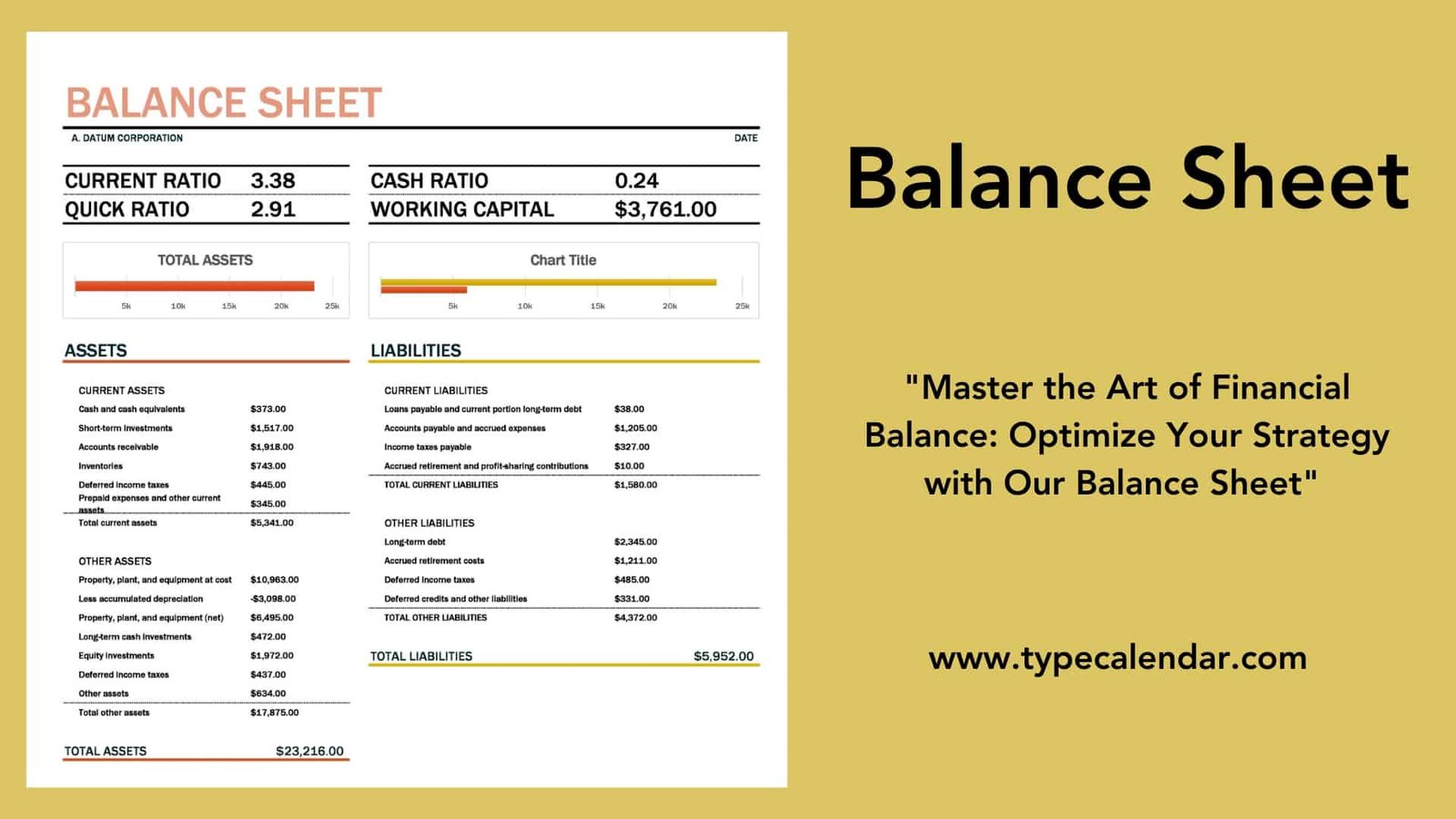
A typical Balance Sheet PDF consists of three major sections: Assets, Liabilities, and Equity.
Assets Section
Assets are resources owned or controlled by an entity with economic value.
They are usually divided into:
1. Current Assets
These are assets expected to be converted into cash or used within one year. Examples include:
- Cash and cash equivalents
- Accounts receivable
- Inventory
- Prepaid expenses
2. Non‑Current (Long‑Term) Assets
These are resources held for long periods, such as:
- Property, Plant & Equipment (PPE)
- Long‑term investments
- Intangible assets (e.g., patents)
Understanding how assets are classified helps interpret the Balance Sheet PDF structure and assess liquidity and long‑term stability.
Liabilities Section
Liabilities represent obligations the business must settle in the future.
They include:
1. Current Liabilities
Due within 12 months, e.g:
- Accounts payable
- Short‑term obligations
- Accrued expenses
2. Long‑Term Liabilities
Due after one year, e.g:
- Long‑term debt
- Deferred tax liabilities
- Lease liabilities
Identifying liabilities in a Balance Sheet PDF helps stakeholders evaluate how much a company owes and how quickly those financial obligations must be met.
Equity Section
Equity shows the owner’s or shareholders’ claim after all liabilities are subtracted from assets. It includes:
- Owner’s capital or shareholder funds
- Retained earnings
- Additional paid‑in capital
Equity reflects the net value of a company and is essential in understanding long‑term sustainability and investor value.
Step‑By‑Step: How To Read A Balance Sheet PDF
Reading and interpreting a Balance Sheet PDF may feel overwhelming at first, but it becomes clearer when broken down into manageable steps:
Step 1: Examine The Header
Look for:
- Company name
- Reporting date
- Currency format
This tells you the exact point in time covered by the balance sheet.
Step 2: Analyze The Assets
Start with assets by examining current assets first, then long‑term ones.
Questions to ask:
- What portion of the assets is liquid (easily converted to cash)?
- How much is tied up in fixed or long‑term assets?
Understanding this provides insight into liquidity and how quickly the company could meet obligations if needed.
Step 3: Review Liabilities
- Identify current vs. long‑term liabilities.
- Assess whether the company could meet upcoming obligations.
- Compare liabilities with assets to gauge financial risk.
A healthy Balance Sheet PDF will typically show a manageable level of liabilities relative to assets.
Step 4: Understand Equity
Equity balances out the equation and shows retained value.
Questions to consider:
- Has retained earnings grown over time?
- What portion of owner investment remains?
Understanding equity helps in evaluating profitability trends and reinvestment decisions.
Step 5: Check Balance Sheet Ratios
Certain ratios derived from the Balance Sheet PDF provide deeper insight:
- Current Ratio = Current Assets ÷ Current Liabilities
- Debt‑to‑Equity Ratio = Total Liabilities ÷ Total Equity
These ratios help quantify financial stability and future outlook.
Tips For Interpreting A Balance Sheet PDF
- Compare Historical Reports: A single Balance Sheet PDF is useful, but comparing multiple periods shows trend analysis.
- Understand Context: Industry standards vary; what is strong for one sector might be weak for another.
- Use With Other Financial Statements: Combine with income statements and cash flow statements for a complete picture.
- Check Notes: Many balance sheets include footnotes explaining unusual items or changes.
These practical tips make it easier to extract meaningful information from any Balance Sheet PDF.
Common Mistakes To Avoid
- Ignoring footnotes or disclosures in the Balance Sheet PDF.
- Assuming all assets or liabilities have equal impact.
- Not benchmarking against industry norms or past performance.
Avoiding these mistakes ensures a more accurate and responsible interpretation.
Learn tools for financial understanding: How to Record Smoothly on a Modest Computer (useful for documenting processes while analyzing finance) How to Record Smoothly on a Modest Computer | BusinessToMark
Applications Of Reading A Balance Sheet PDF
Knowing how to read a Balance Sheet PDF has real‑world applications:
- Business owners use it to monitor performance and manage growth.
- Investors evaluate financial health and potential return.
- Students learn core financial principles.
- Analysts track ratios and trends across sectors.
This practical knowledge supports better decision‑making across economic roles.
Discover broader finance‑related articles at BusinessToMark for contextual growth and skills development. BusinessToMark Finance Articles
Conclusion
Learning how to read a Balance Sheet PDF is a vital skill that adds value whether you’re managing a business, evaluating investment opportunities, or improving your financial literacy. From understanding the structure to applying analytical steps, this guide equips you with a clear roadmap to master a Balance Sheet PDF and extract meaningful insights confidently.